Common Mistakes When Storing Wheat Berries and Flour at Home
A practical home storage guide to wheat berries and flour — moisture control, airtight containers, pest...

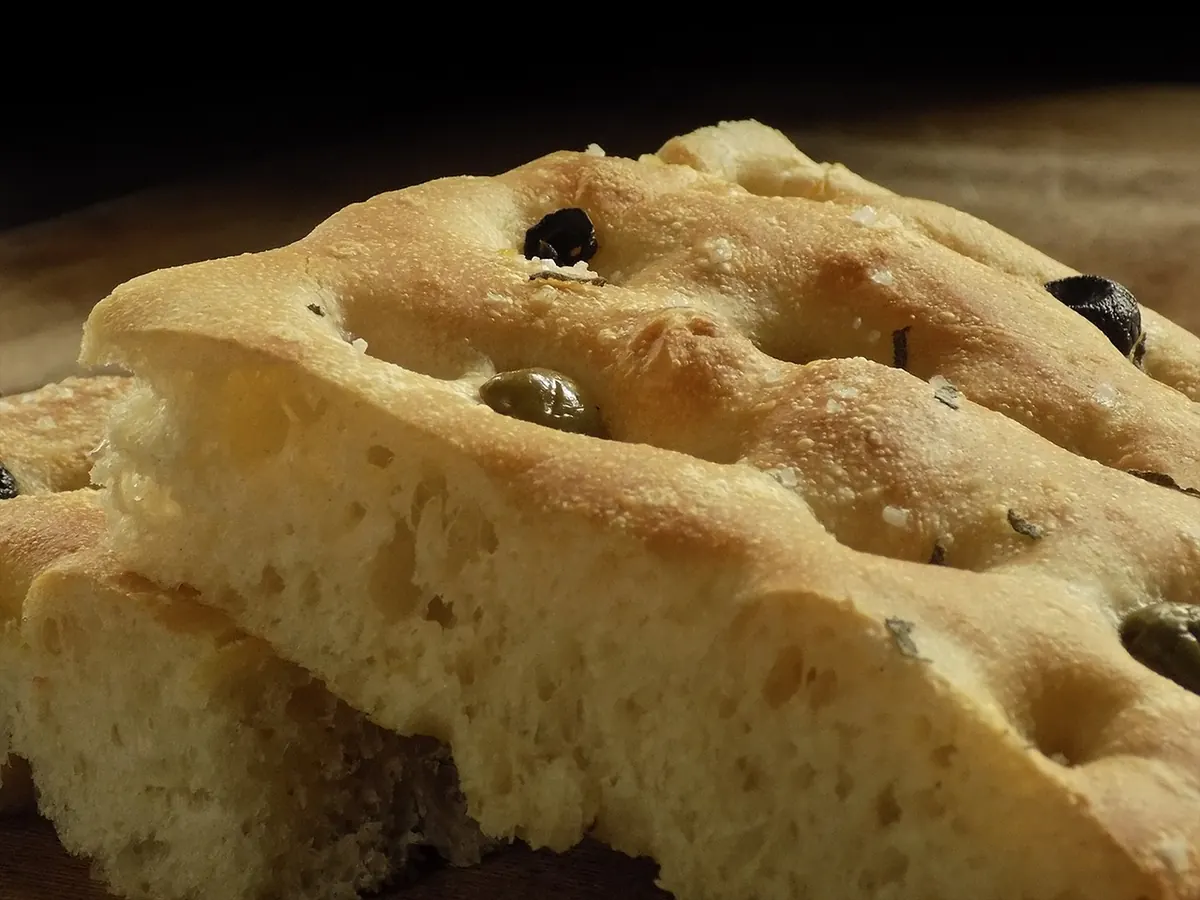
Focaccia has a reputation for being forgiving, and most of the time it is. Then you swap in whole wheat flour and the rules shift. The bran drinks water slowly and cuts through gluten strands, the dough feels stiffer than the white-flour version you may have made before, and a pan that looked pillowy at the start can bake into something closer to a cracker.
None of that is a reason to leave the whole wheat in the cupboard. It means the dough wants more water, a rest before the yeast goes in, and a baker who resists the urge to fiddle. What comes back is a focaccia with a nutty, faintly sweet base that stands up to olive oil and rosemary instead of vanishing beneath them.
This is a same-day recipe: about four and a half hours from mixing bowl to cutting board, with maybe twenty minutes of that being real work. It uses 100 percent whole wheat flour, a generous amount of olive oil, and enough rosemary that you can smell it from the next room.
Whole wheat flour is not white flour with colour added. It carries the bran and the germ, and both change how the dough behaves. Bran particles are thirsty and slightly abrasive; they interrupt the gluten network as it forms. The germ brings fat, which is lovely for flavour and shortening on the shelf, but it makes the flour go stale faster than white flour does. Smell your flour before you bake with it — whole wheat should smell sweet and wheaty, not like a pantry that needs cleaning.
The practical responses are simple. Hydrate more than you would with white flour, somewhere near 80 percent of the flour's weight. Let the flour and water sit together before yeast and salt arrive so the bran can absorb water and soften. Build strength with folding rather than kneading, because a wet whole wheat dough responds better to gentle, repeated stretching than to ten minutes of wrestling on the counter.
Expect a slightly tighter crumb than a white-flour focaccia. That is not a compromise; it is the texture that makes a slice hold up under a slick of oil and a scatter of salt.
Labels vary. White whole wheat, milled from white wheat, is milder and gives a more open crumb; stone-ground hard red is more assertive, thirstier, and may want another 20 g of water if the dough feels tight after the first rest. Both work here.
Use a metal pan roughly 23 by 33 cm. Metal conducts heat straight into the base, which is half the battle for a crisp bottom; glass and ceramic are slower and gentler, which is the opposite of what you want. A larger pan means a thinner focaccia, so shave three or four minutes off the bake.
These timings assume a kitchen at around 24°C. A cool room pushes everything later; a warm one pulls it in. Judge the dough, not the clock.
Done looks like this: deep golden on top, darker and crisp at the edges, and a base that lifts cleanly when you ease a spatula underneath. If you keep a probe thermometer, the centre reads around 95°C.
The oil is doing two jobs, flavour and frying. Use enough that you can see it pooling around the edges of the pan before the dough goes in, and do not line the pan with parchment — the paper insulates the base from the metal and blunts the browning you are after.
Heat matters just as much. Put a baking steel or a stone on the rack just below the middle and preheat the oven for a full thirty minutes before the pan goes in. If you have neither, use the lowest rack position. A properly hot surface under the pan turns the bottom of the focaccia a shade of brown that no amount of top heat can fake.
Two common failures are worth naming. Underbaking leaves the crumb damp, and that moisture migrates downward and softens the base within minutes of leaving the oven. Over-proofing does something similar: the structure sags, the oil seeps in, and the whole thing bakes flat and greasy. If the
Photo: arifarca / Pixabay
A practical home storage guide to wheat berries and flour — moisture control, airtight containers, pest...
A practical look at how stone mills grind grain, why the flour comes out in so many particle sizes, and...
A hands-on guide to making orecchiette from scratch: mixing firm durum dough, rolling even ropes, and...